Junk Removal in Sanford
Hauling for Sanford homes, rentals and the historic district bungalows, from a single appliance to a full-house cleanout, with a free estimate and the price fixed in writing before the crew lifts anything.
- Written price before loading
- Next-day pickups available
- Historic district carries handled
Free Estimates in Sanford
Sanford gives its residents more free curbside help with large items than most towns around Orlando, and that shapes when a paid hauler is worth calling here. The city's contracted hauler collects furniture once a week on the second garbage day with no limit on pieces, as long as each piece can be moved by two people, weighs 50 pounds or less and is no longer than five feet, according to Waste Pro's Sanford service page. A hauler earns the call when the item fails those limits, when it is still inside the house, when the pile is a whole garage, or when the job has to happen today.
The estimate is free by phone, photo or on site, and whoever attends agrees the number in writing before loading. Pricing follows the fraction of the truck bed the load fills, with single items priced on their own and adjustments named for stairs, long carries and heavy material. No deposit; payment when the job is done.
Sanford's housing is older and more rented than the county around it: 45 percent of the city's 27,088 units were built before 1990, 13.6 percent before 1960, and 48 percent of occupied homes are rented (Census ACS 2024 five-year estimates). The old core around the Sanford Residential Historic District brings narrow lots, alleys and porch steps; the rental share brings turnover cleanouts.
What Sanford collects at the curb free
Sanford residents inside the city limits have a weekly furniture pickup, a Wednesday appliance pickup by request, and two free Community Clean-Up Days a year, which together cover more than most neighboring towns offer. The details, from the City of Sanford Solid Waste and Recycling page and Waste Pro's Sanford service page:
- Furniture is collected once a week on the second scheduled garbage day, with no limit on the number of pieces. Each piece must be movable by two people, weigh no more than 50 pounds and be no longer than five feet. Anything outside those limits is left behind with a tag.
- Appliances are collected on Wednesdays after a call to the Solid Waste Division at 407-688-5089 before that Wednesday.
- Automobile tires are limited to eight per residence per year and batteries to two, collected on the second garbage day.
- Minor household repair and remodeling debris is limited to three garbage cans per residence per week.
- Chargeable bulk waste, for larger piles, is collected on the second garbage day by request, billed per cubic yard at the contracted rate with a four cubic yard minimum and a 20 cubic yard maximum.
- Items go out by 7 a.m. on pickup day and no earlier than 5 p.m. the day before.
The free Community Clean-Up Days run on four Saturdays in April and four in October, divided by quadrant around US 17-92. The city's 2026 spring schedule listed April 4, 11, 18 and 25. Piles are capped at 20 cubic yards, each item at 50 pounds and five feet, tires at eight, and construction debris and hazardous waste are refused. Residents outside the city limits fall under Seminole County's rules instead and the county points them to a bulk item request form.
So a sofa that two people can carry to the curb will get collected free in Sanford within a week. A sleeper sofa that weighs more than 50 pounds, a sectional longer than five feet, a mattress set still upstairs, a garage that would fill six cubic yards, or a pile of fence panels and tile all fall outside the free service, and that is where the hauler we route comes in.
Working in the historic district and the old core
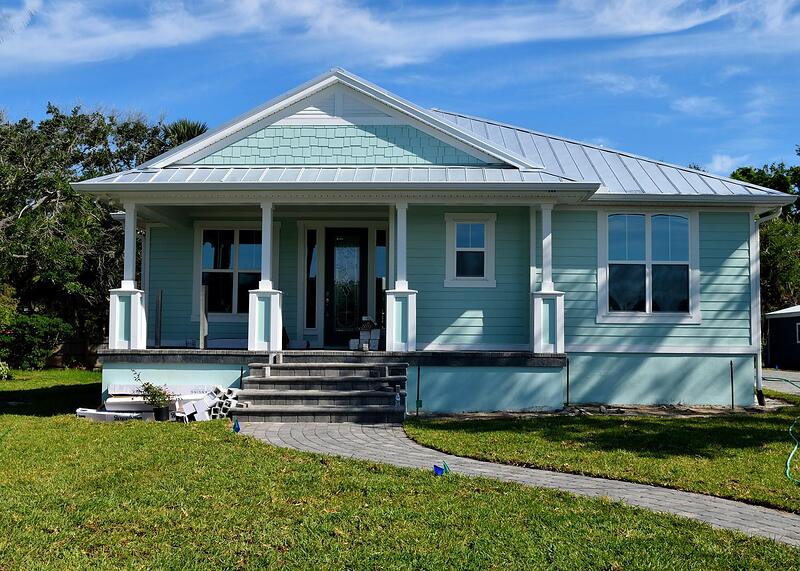
The Sanford Residential Historic District was listed on the National Register in 1989 with 434 contributing buildings, according to the National Park Service nomination, and the city's Historic Preservation page lists four locally regulated districts: Downtown Commercial, Sanford Residential, Sanford Avenue and Georgetown Residential. The houses are Queen Anne, Craftsman, Colonial Revival, bungalow and frame vernacular, on lots platted for a town of the 1880s to 1920s. Many back onto alleys, and the front approach is a porch with steps and a narrow walk under oaks.
For a junk crew that means the truck often stages in the alley or on the street, the carry runs through a front door built narrower than modern ones, and a sofa may need to be cut down to get out. Whoever attends walks the path first and names the long-carry adjustment on the estimate before loading. Floor protection goes down on heart pine.
The city requires a Certificate of Appropriateness before any exterior work, including repairs and site work, on a property in the Downtown Commercial, Sanford Avenue or Sanford Residential districts, and for demolition and new construction in Georgetown. Clearing the inside of a house needs no certificate. If a renovation is producing exterior debris, that work should already hold its certificate, and the hauler's job is to remove what it leaves. A full-house job on one of these properties is handled as an estate cleanout, with the keep, donate and haul piles agreed room by room.
Seminole County disposal fees and where the load goes
Sanford is the county seat of Seminole County, and a hauler working here tips at the Seminole County Landfill at 1930 Osceola Road in Geneva or the Central Transfer Station at 1950 State Road 419 in Longwood, both run by the county's Solid Waste Management division. The county's rates page lists $41.63 per ton for covered loads of Class I garbage, yard waste and Class III material, and $83.25 per ton for uncovered loads, rates effective September 25, 2024. Passenger tires are $3.16 each, with a limit of four at the transfer station and ten at the landfill.
The two sites take different things. Per the county's locations page, the Geneva landfill is open daily 7:30 a.m. to 5:30 p.m. and accepts construction and demolition debris, appliances (white goods), tires and yard waste. The Longwood transfer station is open Monday to Saturday and takes household garbage, yard waste and recycling, and its household hazardous waste tunnel accepts paint, chemicals and electronics free from Seminole County residents, including those inside city limits. The county's residential guidelines say furniture and appliances should go to the landfill rather than the transfer station.
Geneva is a 25 to 30 minute drive east of downtown Sanford, so a hauler with a mixed load of furniture and renovation debris makes one run there rather than splitting it. Refrigerators and freezers are barred from burial under Florida Statute 403.708(12), and EPA Section 608 requires certified refrigerant recovery before scrapping, so the crew that takes the job routes them to a metal recycler with the recovery statement kept on file. Haulers do not take paint, fuel, pesticides, pool chemicals or fluorescent tubes; those go to the Longwood tunnel.
Rental turnover and the apartment stock
Nearly half of Sanford's occupied homes are rented, and 29.5 percent of its housing units are in buildings of five or more units (Census ACS 2024 five-year estimates), which makes move-out and turnover cleanouts a steady part of the work here. The newer complexes along Rinehart Road and near the SunRail station and the older duplexes and small apartment buildings closer to downtown both produce the same call: a unit emptied by the lease deadline with a mattress, a sofa, a dresser and bags of what the last tenant left.
The city's weekly furniture pickup serves addresses with curbside service, and many apartment properties use dumpsters instead, so the free route is often closed to a renter or a property manager. Whoever we route can meet a manager at the unit, carry down from a third floor with the stairs named on the estimate, and provide proof of insurance to the office. Landlords clearing abandoned property after an eviction should look at the eviction and foreclosure cleanout page for how that is sequenced.
What Gets Hauled in Sanford
Sanford calls come from three places: the historic core where the free pickup cannot handle the item or the carry, the rental stock along the corridors, and the newer subdivisions out toward Lake Mary. The services most called for here:
- Junk removal for garage and whole-house loads larger than the city's 50 pound, five foot curbside limits
- Furniture removal for sleeper sofas, sectionals and anything the two-person rule leaves at the curb
- Eviction and foreclosure cleanout for landlords in a city where 48 percent of homes are rented (Census ACS 2024 five-year estimates)
- Construction debris removal for renovation loads beyond the three cans a week the city allows
- Appliance removal when a refrigerator cannot wait for the next Wednesday request slot
A Typical Sanford Pickup
The situation: A Craftsman bungalow in the Sanford Residential Historic District has sold, and the closing is nine days out. The seller has a sleeper sofa too heavy for the city's two-person rule, an upright piano nobody claimed, a shed full of paint cans and tools, and a side yard too narrow for a dolly past the air handler.
What gets done: Photos of each space go to the dispatcher and a written range comes back with the piano and the long carry named as their own lines. The crew that takes the job stages the truck in the alley, cuts the sleeper down to clear the front door, and walks the piano out on a board over the porch steps. The paint cans stay behind with a note pointing the seller to the free hazardous waste tunnel at the Longwood transfer station. The load goes to the Geneva landfill and the piano's metal frame to the recycler.
How it turns out: The house is clear by early afternoon, the porch and the heart pine floors are unmarked, and the invoice matches the range agreed before the first item moved. The seller drives the paint to Longwood on Saturday morning.
What This Costs in Sanford
The national brackets apply in Sanford: Fixr (updated January 2025) puts the average junk removal job near $300, the typical range at $150 to $600 and a full truckload at $450 to $650, while HomeGuide (May 2024) lists $150 to $350 per load as typical, a washer or dryer at $70 to $205 and a mattress at $70 to $100. Your written estimate sits inside those ranges and is the figure that holds.
Sanford's own drivers are the carry and the county scale. A porch-and-steps carry from a 1920s bungalow, an alley stage where the truck cannot reach the door, or a third-floor apartment without an elevator each add labor the estimate names up front. The county charges by the ton at Geneva and Longwood, so a load of tile, concrete or wet carpet costs more than the same volume of furniture, and whoever attends will say so when they see it. The Geneva landfill is close enough that distance rarely moves the number for a Sanford address.
Where a Sanford load ends up
An explainer on what happens to a truckload after it leaves the curb.

Video: Van Dyk Recycling Solutions on YouTube
Will the city pick up my couch for free in Sanford?
Usually, yes. Waste Pro's Sanford service page says furniture is collected once a week on the second garbage day with no limit on pieces, provided each piece can be moved by two people, weighs 50 pounds or less and is no longer than five feet, set out by 7 a.m. and no earlier than 5 p.m. the day before. A sleeper sofa, a sectional or a solid wood armoire usually fails the weight or length rule and gets tagged and left. Anything still inside the house, or a pile bigger than a curb can hold, is a job for the hauler we route.
How do I get rid of a refrigerator in Sanford?
The city collects appliances on Wednesdays after an advance call to the Solid Waste Division at 407-688-5089, with the same two-person, 50 pound limits as furniture, which a full-size refrigerator will not meet. A hauler takes it the day you choose, carries it out of the kitchen, and routes it to a metal recycler, since Florida Statute 403.708(12) bars burying appliances and EPA Section 608 requires certified refrigerant recovery first. Ask whoever attends to confirm that route before loading. Residents can also take appliances to the Seminole County Landfill in Geneva, which the county lists as accepting white goods.
Is it cheaper to rent a dumpster or hire a hauler for a Sanford renovation?
For a long job that produces debris over several weeks, a dumpster usually wins: Fixr (January 2025) lists a 10-yard rental at $200 to $550 a week with a $380 average. For a single day's pile, a hauler usually wins, because the crew loads it and you pay for the fraction of the truck used, with the Fixr typical range at $150 to $600. In Sanford's historic districts a dumpster on a narrow lot or an alley can be hard to place, and the city allows only three cans of remodeling debris a week at the curb, so a one-time pickup often fits better.
Do I have to be home for the pickup?
For a pile in the driveway or an open garage, no. For anything inside, someone needs to open the door and confirm what stays, and for an apartment the office usually wants a manager present. Either way the price is agreed in writing before loading, so you can leave once the number is confirmed. Whoever attends carries proof of liability insurance and can show it to a property manager or an association on request.
Nearby Areas We Serve
Haulers routed from here also work the towns around Sanford, each with its own curbside rules.